





Ultimate Great Dane Guide: Traits, Care, Training & Health Tips
Towering in size, gentle in spirit — everything you need to know about raising, training, and caring for the world's most lovable giant.


Quick take: The Great Dane is a gentle giant — calm, affectionate, and deeply devoted, wrapped in one of the largest frames in the canine world. Behind that regal, boar-hunting heritage is a sensitive homebody who wants nothing more than to lean against your leg and be part of the family. Danes reward owners who understand giant-breed realities: joint-conscious care, bloat awareness, durable gear built to their scale, and a soft place to rest that giant body. Get those pieces right and you'll share your home with one of the most rewarding companions a dog lover can know.
Want to explore more breeds? Visit the full hub here: Top 50 Purebred Dog Guide.
1. Introduction to the Breed
Few dogs make an entrance like a Great Dane. Standing shoulder-height to many adults and capable of resting a chin flat on the kitchen counter, the Dane is often called the "Apollo of dogs" — a nod to the sun god and to the breed's blend of power and elegance. Yet anyone who has actually lived with one knows the truth: this towering guardian is, at heart, a cuddly, sensitive softie who thinks of himself as a lap dog and will happily prove it on your couch.
Great Danes were built for a job — hunting wild boar and guarding estates — but centuries of selective breeding have dialed their temperament toward gentleness and companionship. Modern Danes are affectionate, patient with children, and eager to be wherever their people are. They are not high-energy working dynamos; they are dignified companions who enjoy a good walk, a good nap, and constant closeness to the humans they love.
That combination makes the Great Dane deeply rewarding, but it also asks something of the owner. A dog this size needs early manners, thoughtful nutrition, joint-smart routines, and equipment that can actually handle giant-breed forces. This guide walks through all of it — traits, history, care, training, and health — so you can give your Dane the big, comfortable, well-supported life he deserves.
2. History of the Breed
Despite the name, the Great Dane is not Danish — the breed was developed in Germany, where it is still known as the Deutsche Dogge (German Mastiff). Its ancestors were powerful mastiff-and-sighthound crosses used from the Middle Ages onward to hunt wild boar, one of the most dangerous quarry a dog could face. These early "boarhounds" needed size, speed, courage, and a strong grip — the raw material of today's Dane.
By the 1600s, German nobility kept refined versions of these dogs as "chamber dogs," pampered estate guardians that slept in bedchambers and warded off intruders. As the need for boar hunting faded, breeders leaned into the dog's companionable side, softening its temperament while preserving the majestic silhouette. The breed was formally standardized in Germany in the late 19th century, and the elegant, people-loving Great Dane we recognize today took shape.
That heritage still echoes in the modern dog. The guardian instinct survives as a calm, watchful presence — a Dane rarely needs to do more than stand up to make a visitor reconsider. But the hunting drive has largely been replaced by devotion, which is why today's Dane is celebrated less as a working dog and more as a regal, gentle family member.
3. Physical Characteristics

Typical Size and Weight
The Great Dane is a true giant breed. Males typically stand 30–34 inches at the shoulder and weigh 140–175 pounds; females stand 28–32 inches and weigh 110–140 pounds. On their hind legs, many Danes are taller than the people who own them. That scale is the single most important fact to internalize, because it shapes everything else — how they should exercise, what they should eat, how their joints age, and what kind of gear can actually contain them safely.
Coat and Color
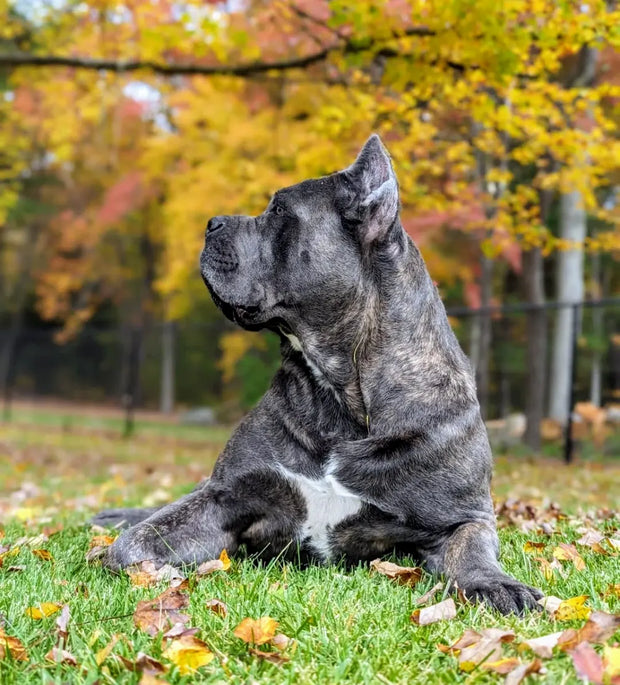
Danes wear a short, smooth, close-lying coat that is easy to maintain but sheds steadily year-round — a lot of hair, simply because there is a lot of dog. The breed comes in a striking palette of recognized colors: fawn (golden tan with a black mask), brindle (fawn with black tiger striping), blue (steel gray), black, harlequin (white with torn black patches), and mantle (black and white in a tuxedo pattern). Whatever the color, the coat is low-fuss and responds beautifully to regular brushing.
Distinctive Features
A long, arched neck, deep chest, level topline, and long legs give the Dane its unmistakable noble carriage. The head is long and chiseled, and the expression — despite all that size and power — is soft, warm, and almost thoughtful. Ears may be natural (folded) or, in some regions historically, cropped; the natural look is increasingly preferred. Put it all together and you get a dog that looks like living statuary until it flops over for a belly rub.
4. Personality Traits
If you remember one thing about Great Dane temperament, make it this: they are people dogs to the core. Danes bond intensely with their families and genuinely dislike being left out or left alone. They are affectionate, patient, and famously "leany" — a Dane will press his full weight against your legs as a sign of love, a habit owners quickly learn to brace for.
With children, well-socialized Danes are typically gentle and tolerant, though their sheer size means play with small kids should always be supervised — a happy tail or an enthusiastic turn can knock over a toddler without any ill intent. With strangers, most Danes are calm and dignified rather than aggressive; their guarding is done through presence, not fury. And with other pets, early socialization usually produces an easygoing companion.
"A Great Dane guards your home simply by standing in it — and thanks you for the privilege by trying to sit in your lap."
The flip side of all that devotion is sensitivity. Danes do not respond well to harsh handling or long stretches of isolation; separation-related stress is common in a breed this attached. They thrive on inclusion, routine, and gentle leadership. Give a Dane those things and you get a steady, loving, wonderfully mellow housemate.
5. Care Requirements
Exercise Needs
Great Danes are surprisingly moderate athletes. An adult does well on 30–60 minutes of activity a day — a couple of relaxed walks plus some low-key play is plenty. What they do not need is high-impact, repetitive pounding, especially while young. Because giant-breed bones and joints grow slowly, over-exercising a Dane puppy (long runs, jumping, stairs, rough play on hard surfaces) can damage developing joints for life. Keep puppy exercise gentle and self-directed, and save structured jogging for a fully mature dog.
Walking a dog this powerful also raises a practical point: your leash and hardware have to match the animal. A flimsy lead is a genuine safety hazard when 150 pounds decides to investigate a squirrel. This is exactly where giant-breed-rated walking gear earns its keep — the kind of leash built to survive a lifetime of big-dog forces rather than a season.

Walking Pick
Maximus Tactical Dog Leash (75–150 lbs)
Built for exactly the kind of pulling power a Great Dane can produce, this American-made tactical leash is rated for 75–150 lb dogs and backed by a lifetime guarantee — dependable control on every walk. Prefer to browse first? See the full lineup of handcrafted USA-made dog leashes.
Shop the Maximus Leash for Great DanesMental Stimulation
Danes are intelligent and emotionally attuned, but they are not the tireless problem-solvers of a herding breed. They enjoy gentle brain work — short training games, food puzzles, sniff-walks, and above all, simply being included in daily household life. Because they crave companionship, "mental stimulation" for a Dane is often just togetherness: a dog who feels part of things is a calm, contented dog. Rotating a couple of engaging chew and puzzle toys keeps a bored giant from inventing his own entertainment.
Grooming Needs
The Dane's short coat is genuinely low-maintenance, but "short" is not the same as "no shedding." A weekly once-over with a grooming comb or rubber curry removes loose hair before it lands on your floors and furniture, and it distributes the skin oils that keep that sleek coat healthy and shining. During seasonal sheds, bumping brushing up to two or three times a week makes a real difference in the amount of hair around the house.

Grooming Pick
Super Groom 2 Comb
A short, smooth coat sheds quietly all year, so a simple, well-made comb is the tool that keeps loose hair off your couch without irritating the skin. Quick weekly passes are all a Dane needs. Explore the full USA-made pet grooming collection for more.
Shop the Grooming CombBeyond the coat, giant-breed grooming means paying attention to the extremities. Keep nails trimmed short, because overgrown nails change a heavy dog's gait and stress already-vulnerable joints. Check and clean the ears, brush the teeth regularly, and inspect the elbows and hocks for calluses — a common issue in big dogs that rest their weight on hard floors, and one more reason a supportive bed matters.
Dietary Considerations
Nutrition may be the single most consequential part of raising a Great Dane, and it starts in puppyhood. Giant-breed puppies must grow slowly: a diet formulated specifically for large- or giant-breed growth (with carefully controlled calcium and calories) helps prevent the developmental bone and joint disorders that plague dogs fed to grow too fast. Ask your vet to guide the transition to adult food and to monitor body condition — a lean Dane is a healthier Dane.
Just as important is how they eat. Great Danes are among the breeds most at risk for bloat, or gastric dilatation-volvulus (GDV), a life-threatening emergency in which the stomach fills with gas and can twist. To reduce the risk, feed two or three smaller meals rather than one large one, slow down fast eaters (a slow-feeder bowl or a food puzzle helps), avoid heavy exercise right around mealtimes, and talk to your vet about preventive options. Learn the warning signs — a distended belly, unproductive retching, restlessness, drooling — and treat them as a call-the-vet-now emergency.
6. Health and Lifespan
Here is the hard truth every prospective Dane owner should face honestly: giant breeds live short lives. A Great Dane's typical lifespan is roughly 7–10 years, and the years you get are richer when you plan proactively for the conditions the breed is prone to. Forewarned is forearmed.
The big four to know are: bloat (GDV), the acute emergency described above; dilated cardiomyopathy and other heart conditions, which make annual cardiac checks worthwhile; hip dysplasia and osteoarthritis, joint problems magnified by the breed's weight; and bone-related issues tied to too-fast growth. Wobbler syndrome (a neck/spinal condition) and certain cancers also appear in the breed. Responsible breeders screen for heart and hip problems, and a good relationship with a vet who knows giant breeds is invaluable.
7. Training and Socialization
With a breed this large, training is not optional — it is a safety requirement. A Great Dane that jumps up, pulls, or ignores cues is a genuine hazard simply by virtue of physics, so the goal is to build reliable manners while your dog is still young and (relatively) small. The good news is that Danes are people-pleasers who learn quickly when the approach is right.
That approach is positive reinforcement. Danes are sensitive and shut down under harsh corrections; they blossom with reward-based methods, patient repetition, and clear, consistent expectations. Prioritize the foundations that matter most at scale: a rock-solid "leave it," a dependable recall, polite leash walking, and — crucially — a firm "off" so a 150-pound dog never learns that leaning or jumping earns attention. Practice loose-leash walking early, on properly rated equipment, so good habits are locked in long before your dog outweighs you.
Socialization should run in parallel and start young. Expose your Dane puppy to a wide variety of people, friendly dogs, surfaces, sounds, and everyday situations during the critical early months. A well-socialized Dane grows into the calm, unflappable giant the breed is famous for; an under-socialized one can become fearful, and fear in a dog this size is a problem you never want to manage. Reward-based training and durable long-lines make early recall and manners work far easier.

8. Ideal Home Environment
Contrary to what you might guess, Great Danes can adapt to smaller homes and even apartments — they are low-energy indoors and spend much of the day resting. What they truly need is not acreage but space to be comfortable and people to be near. Room to stretch out, easy access to outdoor potty breaks, and, importantly, soft flooring or rugs to protect joints and prevent slipping all matter more than square footage.
What a Dane cannot tolerate is being an outdoor dog or a frequently-alone dog. This is a breed that must live inside, as part of the family, with their humans close by. Households that are home often, value a calm companion, and are prepared for the realities of giant-breed care — the drool, the shedding, the counter-surfing reach, the food and vet bills scaled to a huge animal — are exactly where Danes flourish. Give them inclusion and comfort and they ask for little else.
9. The Best Beds & Toys for a Great Dane
For a giant breed, the right bed is not a luxury — it's orthopedic health equipment. A Dane's weight bears down hard on hips, elbows, and shoulders, and a thin or undersized bed lets those joints press into the floor all night. A large, supportive, densely cushioned bed distributes that weight, cushions pressure points, wards off the calluses big dogs get from hard surfaces, and gives an aging Dane the restorative sleep that keeps him mobile. The key is size: the bed has to be big enough for a Dane to stretch out fully on his side, which for this breed means going as large as it gets.

Bed Pick
Dog Bed Rectangle Armor™ — XL 48"
Built tough and sized right for a giant like the Great Dane, the XL Rectangle Armor bed gives that big frame a large, durable, orthopedic surface to fully stretch out on — real joint protection for a dog who needs it. Compare sizes across the American-made dog beds & pads collection.
Shop the XL Armor BedToys for a Dane must clear one bar above all: durability. Anything you hand a giant breed has to survive giant jaws without shredding into swallowable pieces, and it has to be big enough that it can't become a choking hazard. Great Danes tend to enjoy controlled interactive play — a good tug session or a satisfying chew — more than frantic fetch, so look for tough, oversized toys that reward gentle strength.

Toy Pick #1
Firefighter Firehose Tug Toy
Made from tough firehose material, this tug is built for the strength a Great Dane brings to play — perfect for controlled, bonding tug sessions that don't fall apart after one round.
Get the Firefighter Tug Toy
Toy Pick #2
RECON Camo Bone Chew Toy
A durable chew-and-fetch bone sized to stand up to large jaws while giving your Dane a safe outlet for chewing. Browse more rugged options in the American-made pet toys collection.
Shop This Toy for Great Danes10. Adoption and Breeder Tips
Bringing home a Great Dane is a big commitment in every sense, so start with a source you can trust. If you buy from a breeder, insist on one who health-tests for heart and hip conditions, raises puppies on a proper giant-breed growth diet, and openly educates buyers about bloat, joint care, and the breed's shorter lifespan. A good breeder asks you as many questions as you ask them, and welcomes you to meet the parents.
Adoption is an equally wonderful path. Great Dane rescue organizations regularly place gentle giants — including adults whose temperament is already known, which can be a real advantage. Be honest with yourself about the practicalities before you commit: the food bills, the vet costs scaled to a huge dog, the drool and shedding, the need to have someone home often, and the emotional weight of loving a breed that doesn't get as many years as we wish. Owners who go in clear-eyed almost universally say the same thing afterward — that there is nothing quite like sharing a home with a Great Dane.
Whichever route you choose, set your home up for success before day one: a giant crate or gated space, food and water stations at a comfortable height, non-slip rugs on slick floors, an appropriately sized bed, and giant-breed-rated walking gear. Keep exploring the rest of the Top 50 Purebred Dog Guide to compare the Dane with other big breeds and find the right fit for your family.
Find the Perfect Gear for Your Great Dane
From XL orthopedic support beds and giant-breed-rated leashes to durable tug toys and easy-care grooming tools — LibertyPaw has everything your gentle giant needs, proudly made in the USA.
Toy Safety Disclaimer
Always supervise your dog during playtime and choose toys appropriate for your dog’s size, age, strength, chewing habits, and style of play. Inspect toys regularly for wear, loose parts, tears, cracks, or other damage, and discontinue use if a toy becomes damaged or presents a potential choking, ingestion, or injury hazard.
No dog toy should be considered indestructible. The safety and longevity of any toy depend on the individual dog’s chewing strength, behavior, manner of play, and continued supervision.
Dog Bed & Comfort Product Disclaimer
Choose a bed or comfort product appropriate for your dog’s size, weight, mobility, behavior, and individual needs. Inspect beds and related products regularly for damage, exposed filling, loose components, deterioration, or other conditions that could create a safety hazard.
Dog beds, including products described as orthopedic or supportive, are intended to provide comfort and support. They should not be considered medical devices and are not substitutes for veterinary diagnosis, treatment, rehabilitation, or professional medical advice.
If your dog experiences persistent pain, difficulty standing, mobility problems, changes in sleeping behavior, or other health concerns, consult a licensed veterinarian.
Grooming Product Disclaimer
Use grooming tools and products only as directed and select products appropriate for your dog’s coat type, skin condition, size, age, and individual sensitivities.
Use grooming tools carefully and avoid excessive pressure, pulling, repeated brushing over irritated areas, or use on broken or inflamed skin. Stop using a grooming product or tool if your dog experiences irritation, discomfort, redness, swelling, unusual sensitivity, or another adverse reaction.
Seek guidance from a veterinarian or qualified professional groomer when dealing with severe matting, persistent skin problems, wounds, unusual coat loss, or other conditions that may require professional attention.
Disclaimer
This blog is intended for general informational and educational purposes only and does not replace professional veterinary advice, diagnosis, treatment, or individualized guidance. Every dog is unique, and individual needs may vary based on age, breed, size, health status, activity level, behavior, environment, and individual sensitivities.
Information regarding pet care, nutrition, training, grooming, supplements, toys, beds, accessories, or other pet products should not be interpreted as a guarantee of safety, suitability, performance, durability, or specific health outcomes for every dog. Product selection, use, and results may vary by individual animal.
Always follow applicable product directions, warnings, care instructions, and recommended usage guidelines. Consult a licensed veterinarian or qualified canine professional before making significant changes to your dog’s diet, supplementation, exercise routine, grooming regimen, health care, or other practices that may affect your dog’s health or wellbeing.


0 comments