




How We Verify Made in USA
Every product we sell is made in the USA. That single sentence is the reason LibertyPaw exists — and this page explains exactly how we back it up.
LibertyPaw started when co-founder David watched his dog Winston chewing — and swallowing pieces of — an overseas-made plastic bone. When he tried to buy American instead, he found origin claims nearly impossible to verify. So we built the store we couldn’t find: one where the verification is done before a product ever reaches the shelf. Read our full story.
What Does “Made in USA” Actually Mean?
Under the Federal Trade Commission’s standard, a product marketed as “Made in USA” must be “all or virtually all” made in the United States — meaning final assembly happens here and essentially all significant parts and processing are of U.S. origin. Many pet brands blur this line with vague phrases like “designed in the USA” or “USA brand” while manufacturing overseas. We hold every supplier to the real standard, and when a product is assembled in the USA from some imported components, honest labeling requires saying so — we’d rather tell you plainly than blur the line.
How We Vet Every Supplier
- Origin documentation first. Before we carry any product, the manufacturer must show us where it is actually made — not just where the brand is headquartered.
- We work with the makers directly. Our products come from specialized American manufacturers and small workshops we know by name — not anonymous import catalogs.
- We test many of our products on our own dogs. Winston and Maximus try items from each brand, including supplements, toys, collars, and grooming tools, before those products earn a place in our store.
- We re-check. If a supplier moves production outside of the USA, the product leaves the store. No exceptions!
- If we can’t verify a product’s quality, safety, and purpose, we don’t sell it—no exceptions. That standard is why our catalog is intentionally small and carefully curated, rather than filled with endless products like many pet stores.
Verification by Product Line
Canine Supplements
All four LibertyPaw soft-chew formulas are made in a GMP-certified, human-grade U.S. facility that has operated since 1963, produced by an NASC Preferred Supplier, with every batch tested for purity and potency in the facility’s own laboratory. Shop supplements
Toys
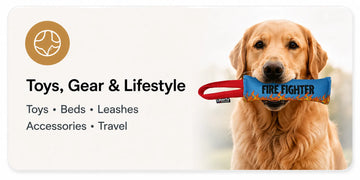
Our plush and fire-hose toys — including the LibertyPaw and American Dog lines — are sewn in the USA from non-toxic materials, including genuine fire-hose fabric for heavy chewers. Shop toys
Collars, Leashes & Accessories
Trish Hampton and Up Country collars, leashes, harnesses, bandanas, bow ties, and blossoms are hand-sewn in American workshops in matching designer pattern families. Shop collars & leashes
Grooming Tools & Dryers
Untangler rotating-tooth combs, rakes, and brushes and K-9 high-velocity dryers are manufactured in the USA — the K-9 line by a maker with over 60 years of American production. Shop grooming
Beds & Pads
Furvana comfort beds and Armor chew-resistant beds use U.S.-made upcycled and recycled foam; the Armor line is built with 1680-denier ballistic fabric. Shop beds
Honest About Sourcing
Every effort is made to source materials from the USA. In some instances, it isn’t possible — in the case of supplements, ingredients are globally sourced, but tested for purity and safety in the GMP-certified U.S. facility where every formula is made.
Common Questions
Are all LibertyPaw products really made in the USA?
Yes. Every product we sell is made in the USA, and every manufacturer is vetted before we carry them. If we can’t verify a product’s origin, it doesn’t go in the store.
Why does country of origin matter for pet products?
Origin determines which safety, labor, and materials standards apply. U.S. manufacturing means U.S. safety inspections, U.S. materials standards, and accountability we can check in person — which matters most for things your dog puts in their mouth every day.
Is LibertyPaw the manufacturer?
LibertyPaw is a family-owned retailer. Products are made by specialized American manufacturers that we have verified to have the same values when it comes to pet safety and American manufacturing.
What happens if a product no longer qualifies?
We pull it. If a supplier moves production overseas, the product will not be sold on our website. No exceptions!
Shop With Confidence
The verification is already done — every product in the store has passed the process on this page.
Browse the American-Made Catalog
Free shipping on qualifying orders • 30-day happiness guarantee • 2% of every order donated to K9s For Warriors and other veteran causes.