





Ultimate Bullmastiff Guide: Traits, Care, Training & Health Tips
The powerful family guardian — the Bullmastiff is a calm, loyal, protective working breed known for strength, devotion, quiet confidence, and a deep bond with its people.


Want to explore more breeds? Visit the full hub here: Top 50 Purebred Dog Guide.
1. Introduction to the Breed
The Bullmastiff is a large, powerful dog with a gentle heart and a serious guardian instinct. This breed was built to protect. Strong, steady, and watchful, the Bullmastiff has a commanding presence without needing to be noisy or overly reactive. It is not usually a frantic dog. It is not usually a high-energy dog. It is a calm, muscular guardian that prefers to observe, stay close, and act only when needed.
That quiet confidence is one of the breed's most defining qualities. A Bullmastiff can look intimidating to strangers, but with its family, it is often affectionate, loyal, and surprisingly soft. Many Bullmastiffs enjoy leaning against their people, resting nearby, following the family around the house, or quietly positioning themselves where they can watch what is happening.
They are not small dogs. They are not lightweight dogs. They are not dogs that can be ignored when training is inconvenient. A Bullmastiff is a powerful companion that needs early guidance, socialization, structure, and responsible ownership.
This breed can be an excellent family dog in the right home. It is usually calm indoors, moderately active, and deeply devoted. Many Bullmastiffs are gentle with respectful children, though supervision is always important because of their size and strength. A full-grown Bullmastiff can accidentally knock someone over without meaning to. That is why manners matter.
Training is not optional with this breed. A Bullmastiff puppy may be cute, clumsy, and soft-faced, but that puppy grows into a dog that can weigh over 100 pounds. Basic obedience, leash manners, polite greetings, crate comfort, and calm handling should begin early.
Bullmastiffs are protective by nature, and that protection must be guided. A well-socialized Bullmastiff learns the difference between normal visitors and true concern. A poorly socialized Bullmastiff may become suspicious, pushy, territorial, or difficult to manage. This breed does best with owners who are calm, consistent, and confident — not harsh, not careless, not passive. Bullmastiffs need leadership that is steady and fair. They are sensitive enough to bond deeply, but strong enough to test limits if boundaries are unclear.
They are especially loved by families and owners who want:
- A loyal guardian
- A calm indoor companion
- A large, powerful dog with moderate exercise needs
- A devoted family protector
- A short-coated breed with simple grooming
- A dog that values closeness and routine
But owners should be realistic. Bullmastiffs drool. They snore. They shed some. They can be stubborn. They can be protective. They need space, training, and careful weight management. They may not be ideal for first-time owners who are uncomfortable handling large guardian breeds. For the right family, the Bullmastiff is unforgettable. Strong outside. Soft inside. Watchful always.
"Strong outside. Soft inside. Watchful always. The Bullmastiff may spend most of the day resting peacefully — but it is always aware."
2. History of the Breed
The Bullmastiff was developed in England, and its history is closely tied to estate protection. During the 1800s, large private estates needed dogs that could help gamekeepers guard land from poachers. The goal was not to create an attack dog. The goal was to create a silent, powerful, reliable guardian that could track, hold, and deter intruders.
The Bullmastiff was created by crossing Mastiff-type dogs with Bulldogs. The Mastiff contributed size, strength, calmness, and substance. The Bulldog contributed courage, determination, and tenacity. Together, these qualities produced a dog that was powerful enough to stop a man, but controlled enough to work closely with its handler.
The breed was sometimes called the "Gamekeeper's Night Dog." That name says everything. The Bullmastiff needed to work in the dark. It needed to move quietly. It needed to recognize threats. It needed to stay close to the gamekeeper. It needed to use strength without unnecessary aggression.
This history still shows in the modern breed. Bullmastiffs are often quiet watchdogs. They may not bark constantly. Instead, they observe. They study movement. They notice who belongs and who does not. They tend to be naturally territorial, devoted to family, and suspicious of unusual activity. These traits can be valuable when properly managed, and a problem when ignored.
The modern Bullmastiff is no longer working nightly on English estates, but the guarding instinct remains part of the breed's identity. That is why socialization and obedience are so important. A Bullmastiff should be confident, stable, and controlled — not fearful, not reactive, not aggressive without reason.
Over time, the breed became appreciated as a family companion and show dog. It was recognized by major kennel clubs and developed a following among people who valued powerful but calm guardian breeds. The Bullmastiff's history explains why it is different from many other large dogs. It was not bred to herd. It was not bred to retrieve. It was not bred to race. It was bred to protect with strength, silence, and loyalty. That original purpose remains in the breed's personality today.
3. Physical Characteristics
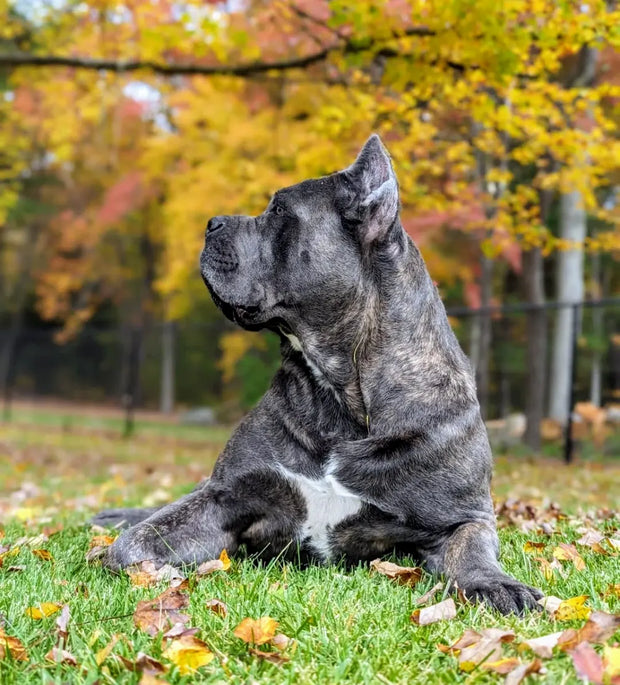
The Bullmastiff is a large, muscular, powerful dog with a square build and serious presence. This breed should look strong without appearing clumsy. Its body is built for power, not speed. It has heavy bone, broad shoulders, a deep chest, a strong neck, and a large head.
Males typically stand about 25–27 inches at the shoulder and weigh around 110–130 pounds. Females usually stand about 24–26 inches and weigh around 100–120 pounds. That is a lot of dog. Even a smaller female Bullmastiff is still a powerful animal. Owners must respect the breed's size when planning training, travel, sleeping space, veterinary care, and household management.
The Bullmastiff's head is one of its most recognizable features. It is broad, strong, and expressive. The muzzle is short and wide, with a dark mask often present. The eyes are alert and intelligent. The ears are V-shaped and carried close to the face. The expression should show confidence — not nervousness, not dullness, not uncontrolled aggression.
The coat is short, dense, and easy to maintain. It lies close to the body and does not require complicated grooming. Common colors include:
- Fawn
- Red
- Brindle
A dark mask is typical and gives the breed its classic guardian look. The short coat makes grooming simple, but it does not protect the dog well from extreme weather. Bullmastiffs can be sensitive to heat because of their size, short muzzle, and heavy body. They should not be overexerted in hot or humid weather.
Their body should be muscular and balanced. A healthy Bullmastiff should feel solid, not soft. Because this breed is large and prone to joint stress, weight management is extremely important. Extra weight is hard on a Bullmastiff. It adds pressure to the hips, elbows, knees, spine, and heart. It can also make breathing and heat tolerance worse.
A fit Bullmastiff should have:
- Strong muscle
- A broad chest
- Firm body condition
- A visible waist from above when possible
- Ribs that can be felt under a light layer of covering
- Smooth movement without stiffness or strain
Because Bullmastiffs are naturally massive, some owners mistake heaviness for health. Bigger is not always better. A leaner, well-conditioned Bullmastiff is usually more comfortable and more mobile than one carrying unnecessary weight. This breed is impressive by nature. It does not need extra pounds to prove it.
4. Personality Traits
Bullmastiffs are loyal, calm, protective, affectionate, and confident. They are natural guardians, but they are also deeply connected family dogs. A well-raised Bullmastiff is steady, watchful, and devoted without being frantic.
This breed often forms a strong bond with its people. Many Bullmastiffs want to be near the family. They may lie across doorways, rest at your feet, follow you quietly, or lean their full weight against your leg as a sign of affection. That lean is classic Bullmastiff behavior — heavy, loving, impossible to ignore.
Bullmastiffs are usually not high-strung dogs. They tend to be calm indoors, especially after puppyhood. They may enjoy lounging, napping, watching the house, and staying close to their people. But calm does not mean lazy in training. Calm does not mean automatic. Calm does not mean harmless without guidance. This is a strong guardian breed. It needs early manners and thoughtful leadership.
The Bullmastiff is often reserved with strangers. It may not rush to greet everyone. It may stand back, observe, and wait for cues from its owner. This is normal for the breed. However, reserved should not mean unstable. A well-socialized Bullmastiff should be able to tolerate normal visitors, public settings, veterinary care, and everyday life without overreacting.
Common Bullmastiff personality traits include:
- Loyal
- Protective
- Calm
- Affectionate
- Reserved with strangers
- Confident
- Powerful
- Watchful
- Sensitive with family
- Stubborn at times
- Quiet compared with many watchdog breeds
- Deeply devoted
Bullmastiffs can be wonderful with children when properly raised and supervised. They are often patient and affectionate. Still, their size creates risk. A Bullmastiff can knock over a child by turning too quickly, leaning too hard, or playing too roughly. Children should be taught to respect the dog's space, and the dog should be taught calm behavior around children. Both matter.
Bullmastiffs may live with other dogs, but careful introductions are important. Some can be same-sex selective or territorial. Early socialization helps, but genetics and individual temperament matter too. Small pets depend on the dog. Some Bullmastiffs live peacefully with cats. Others may not. Management and supervision are important.
The breed is intelligent, but not always eager to repeat commands endlessly. Bullmastiffs can be independent thinkers. They may understand what you want and still move slowly. Patience helps. Consistency helps more. A Bullmastiff wants to trust its owner, and once that trust is built, the relationship can be powerful. This is not a dog that needs constant excitement. It needs belonging. It needs purpose. It needs a family worth guarding.
5. Care Requirements
Bullmastiffs need thoughtful daily care because of their size, strength, health risks, and guardian temperament. They are not high-maintenance in grooming. They are high-responsibility in management. This breed needs moderate exercise, structured training, weight control, comfortable rest, heat protection, and regular veterinary care.
Exercise Needs
Bullmastiffs need daily exercise, but they are not endurance athletes. Most adults do well with moderate activity, such as daily walks, gentle play, and controlled outdoor time. They should stay active enough to maintain muscle and healthy weight, but they should not be pushed into extreme running or high-impact exercise.
Good exercise options include:
- Daily neighborhood walks
- Short training walks
- Gentle fetch
- Controlled yard play
- Low-impact obedience practice
- Slow hikes in cool weather
- Scent games
- Short tug sessions with rules
Puppies need special care. A Bullmastiff puppy grows quickly, and too much impact can stress developing joints. Avoid forced running, repeated jumping, rough stairs, and excessive hard-surface play while the dog is growing.
Adult Bullmastiffs still need movement. Without exercise, they may gain weight, lose muscle, become bored, or develop stiffness. Daily walking is one of the best ways to support both body and mind. Because this is a strong breed, calm leash manners are essential — a properly fitted harness or sturdy walking lead makes daily outings safer and more controlled with a powerful dog.
Heat is a major concern. Bullmastiffs can overheat quickly, especially in warm or humid weather. Exercise should happen during cooler parts of the day. Fresh water, shade, and air conditioning are important. Watch for signs of overheating, including:
- Heavy panting
- Drooling more than usual
- Weakness
- Stumbling
- Bright red or pale gums
- Refusing to move
- Collapse
This breed should never be left outside in heat. A Bullmastiff is powerful, but it is not built for extreme heat.
Grooming Needs
Bullmastiffs are easy to groom compared with many breeds. Their short coat only needs weekly brushing to remove loose hair, distribute natural oils, and keep the skin healthy. A grooming mitt or soft brush usually works well.
Routine grooming should include:
- Weekly brushing
- Nail trimming
- Ear checks
- Dental care
- Skin-fold checks around the face
- Paw inspection
- Wiping drool as needed
Bullmastiffs may drool. Some drool lightly. Some drool heavily. Owners should be prepared for towels, slobber marks, and regular face wiping. Facial folds and lips should be kept clean and dry to reduce odor or irritation. Nail care is important because this is a heavy breed — long nails can affect posture, traction, and joint comfort, so regular trimming helps support proper movement.

Grooming Pick
Super Groom 2 Pet Comb
A short coat still benefits from regular grooming to remove loose hair and keep skin healthy. A simple, effective comb makes weekly maintenance quick and comfortable for a large guardian dog that may not always welcome extended grooming sessions.
Browse LibertyPaw Grooming ProductsDietary Considerations
Nutrition is one of the most important parts of Bullmastiff care. This breed needs a high-quality diet appropriate for large breeds, age, and activity level. Puppies should eat a large-breed puppy formula to support controlled growth. Do not overfeed. Rapid growth and excess weight can increase stress on developing joints. Adult Bullmastiffs should stay lean and muscular, not bulky and soft.
Good feeding habits include:
- Feed measured meals
- Avoid free-feeding
- Monitor body condition weekly
- Use treats carefully
- Keep the dog lean
- Discuss ideal weight with a veterinarian
- Avoid intense exercise right before or after meals
Because Bullmastiffs can be at risk for bloat, owners should talk with their veterinarian about feeding routines, risk reduction, and whether preventive gastropexy is appropriate during another planned procedure. Fresh water should always be available. Food should support strength — not excess weight.
6. Health and Lifespan
Bullmastiffs are powerful dogs, but they have a relatively short lifespan compared with smaller breeds. The typical Bullmastiff lifespan is often around 7–9 years, though some live longer with excellent care, responsible breeding, healthy weight, and early veterinary attention. Because this breed is large and heavy, health awareness matters from the beginning.
Common Bullmastiff health concerns may include:
- Hip dysplasia
- Elbow dysplasia
- Bloat
- Cancer
- Cardiac conditions
- Eye issues
- Hypothyroidism
- Allergies
- Skin irritation
- Kidney disease
- Arthritis
- Heat intolerance
Joint health is especially important. Bullmastiffs carry a lot of weight on their hips, elbows, knees, and spine. Hip and elbow dysplasia can affect comfort, movement, and long-term mobility. Responsible breeders should screen breeding dogs and be transparent about orthopedic history.
Heart health also deserves attention; heart issues in the breed may include valvular disorders, sub-aortic stenosis, and cardiomyopathy. Bloat is another serious concern. Bloat, or gastric dilatation-volvulus, is a life-threatening emergency where the stomach fills with gas and may twist. Large, deep-chested breeds can be at risk. Signs may include:
- Swollen abdomen
- Restlessness
- Drooling
- Unproductive retching
- Pacing
- Pain
- Weakness
- Collapse
This is an emergency. Do not wait.
Cancer is also a concern in many large breeds, including Bullmastiffs. Owners should pay attention to unexplained lumps, weight loss, appetite changes, lameness, or unusual fatigue. Heat intolerance must be taken seriously too. Bullmastiffs are large dogs with short muzzles and heavy bodies, so hot weather can become dangerous quickly. Keep exercise moderate, avoid midday heat, and provide indoor cooling.
Owners should contact a veterinarian if they notice:
- Limping
- Stiffness after rest
- Trouble rising
- Reluctance to climb stairs
- Sudden abdominal swelling
- Unproductive retching
- Persistent coughing
- Fainting or weakness
- Eye changes
- Skin irritation
- New lumps or bumps
- Sudden behavior changes
A Bullmastiff may be stoic. It may not complain early. Owners must notice small changes before they become large problems.
7. Training and Socialization
Training is essential for the Bullmastiff. This is a powerful guardian breed, so good manners are not optional. A Bullmastiff must learn how to walk politely, greet calmly, respond to commands, and trust its owner's leadership. Start early. Puppy training should begin as soon as the dog comes home. Waiting until the dog is large creates problems that are much harder to fix.
Important early skills include:
- Name recognition
- Sit
- Down
- Stay
- Come
- Leave it
- Drop it
- Loose-leash walking
- Place command
- Crate comfort
- Calm greeting
- Doorway manners
- Handling tolerance
Loose-leash walking is especially important. A full-grown Bullmastiff can overpower many people if leash manners are poor. Teach the puppy early that pulling does not move the walk forward. A durable training lead from the LibertyPaw leashes & leads collection gives you reliable control while you build those manners. Calm greetings also matter — a jumping Bullmastiff can hurt someone by accident, so puppies should learn to sit or stand calmly when meeting people.
Positive reinforcement works well, but it should be paired with clear structure. Bullmastiffs respond best to:
- Calm confidence
- Consistent rules
- Short training sessions
- Food rewards
- Praise
- Patience
- Clear boundaries
- Routine
This breed does not need harsh treatment. Harshness can create distrust or defensiveness. But permissiveness can create pushy behavior. The best approach is firm, fair, and calm.
Socialization is critical. A Bullmastiff should be exposed to different people, sounds, places, surfaces, dogs, and everyday situations while young. The goal is to create a confident dog that can handle normal life without fear or overreaction. Good socialization includes:
- Meeting calm adults
- Seeing children from a safe distance
- Walking near traffic
- Visiting pet-friendly stores
- Hearing household noises
- Meeting stable dogs
- Practicing at the veterinarian
- Experiencing grooming routines
- Learning car rides
- Settling around visitors
Because Bullmastiffs are naturally protective, owners should not encourage suspicion or guarding behavior in young dogs. The instinct is already there. It does not need to be intensified. Instead, teach neutrality. Teach calm observation. Teach the dog to look to you for direction. A well-trained Bullmastiff should be able to relax when visitors are welcomed, move away when asked, and stay controlled in public.
This breed may be stubborn. That does not mean it is unintelligent. It often means the dog is thinking, testing, or moving at its own pace. Repetition, patience, and consistency are important. Training should continue into adulthood. Bullmastiffs mature slowly, and adolescence can bring boundary testing, so keep practicing commands, leash manners, impulse control, and calm behavior. A trained Bullmastiff is impressive. An untrained Bullmastiff is a liability. Respect the breed by training it well.
8. Ideal Home Environment
The ideal Bullmastiff home is calm, structured, and committed. This breed does not need constant action, but it does need responsible ownership. It needs people who understand large guardian dogs and are willing to provide training, socialization, comfort, and health care.
Bullmastiffs can adapt to different home sizes. They can live in houses, suburban homes, and even some apartments if their exercise and space needs are met. They are often calm indoors, which helps. However, their size must be considered. A Bullmastiff takes up room. It needs space to lie down, turn around, move through hallways, travel safely, and rest comfortably.
The best homes usually include:
- Calm, confident owners
- Early training
- Daily moderate exercise
- Secure fencing
- Air conditioning in warm climates
- Soft bedding
- Weight control
- Veterinary commitment
- Respectful children
- Careful visitor management
- Realistic expectations about drool and size
A fenced yard is helpful, but it should not replace walks or training. Bullmastiffs should not be left outside as yard guardians. They are family dogs and need close contact with their people. Isolation can create behavior problems and emotional stress.
They are often good family companions. However, homes with very young children should be careful because of the breed's size. The dog may be gentle but still too heavy and strong for unsupervised interaction. Bullmastiffs can live with other pets in some homes, especially when raised with them, but introductions should be slow and thoughtful. Same-sex dog tension can occur in some individuals.
Visitor management is important. A Bullmastiff should learn where to go when guests arrive. A place command, crate comfort, or gated area can help manage excitement and protect everyone's safety.
This breed may not be ideal for:
- Owners who dislike drool
- People who avoid training
- Homes without air conditioning in hot climates
- Families wanting a jogging partner
- Owners who cannot physically manage a large dog
- People who want a highly social dog with all strangers
- Homes that encourage guarding without control
A Bullmastiff needs a supportive bed. This is not optional comfort. A heavy dog resting on hard floors can develop pressure discomfort, joint soreness, and calluses. Soft, supportive bedding helps protect the body and encourages better rest. The LibertyPaw dog beds and pads collection offers durable, orthopedic-style options sized for a heavy guardian breed.
The ideal home understands the Bullmastiff's rhythm. Short walks. Long naps. Quiet watching. Deep loyalty. Calm protection. That is the breed.
9. Best Beds and Toys for Bullmastiffs
Bullmastiffs need gear built for size, strength, comfort, and safety. This is a heavy guardian breed with powerful jaws, large joints, and a calm but strong play style. Products should be durable, supportive, and appropriately sized.
Best Dog Bed for a Bullmastiff
A high-quality bed is essential for a Bullmastiff. This breed is large and heavy, which means hard floors can put pressure on the hips, elbows, shoulders, and spine. Over time, poor rest surfaces may contribute to stiffness or discomfort.
A good Bullmastiff bed should offer:
- Strong joint support
- Thick cushioning
- Durable materials
- Enough room to stretch
- Easy-clean fabric
- Stability on hard floors
- Comfort for senior dogs
Orthopedic-style beds are especially helpful for large breeds. Supportive foam can help distribute weight more evenly and reduce pressure points. The bed should be large enough for the dog to lie naturally. Bullmastiffs may sprawl, curl, or lean against bolsters, so choose a bed that supports the whole body, not just part of it. A washable cover is useful because Bullmastiffs may drool, shed lightly, or track dirt inside.

Bed Pick
LibertyPaw Dog Beds & Pads
Supportive, orthopedic-style beds with durable cushioning to protect the hips, elbows, and spine of a heavy guardian breed like the Bullmastiff — built to hold up under serious weight and comfortable enough for senior dogs.
Explore Dog Beds & PadsBest Toys for Bullmastiffs
Bullmastiff toys should be durable, safe, and sized for a large mouth. This breed may not need constant high-energy play, but it still benefits from chewing, tugging, enrichment, and bonding games.
Good toy options include:
- Large durable chew toys
- Heavy-duty tug toys
- Treat-dispensing toys
- Puzzle toys
- Large fetch toys for gentle play
- Rope toys used with supervision
- Durable rubber-style toys
Avoid toys that are too small. A toy that works for a medium dog may be a choking hazard for a Bullmastiff. Always choose appropriately sized products. Tug can be fun, but it should be controlled. Teach:
- "Take it"
- "Drop it"
- "Leave it"
- "Wait"
Because Bullmastiffs are strong, owners should avoid rough, uncontrolled tug that encourages overexcitement or grabbing. Puzzle toys are useful for mental stimulation — a Bullmastiff may enjoy working for treats, solving simple food puzzles, or engaging with enrichment toys during quiet time. Chew toys can help satisfy natural chewing instincts and reduce boredom.

Toy Pick #1
LibertyPaw Firefighter Firehose Tug Toy
A strong choice for supervised tug and bonding games with a powerful breed that enjoys interactive play. Built from rugged USA-made firehose material to stand up to big-breed strength.
Get the Firefighter Firehose Tug
Toy Pick #2
LibertyPaw RECON Camo Firehose Tug Toy
A rugged option for large dogs that need durable, engaging toys for controlled play sessions — tough enough for a Bullmastiff's powerful jaws and ideal for structured tug.
Get the RECON Camo Firehose TugWant more USA-made options? Browse the full collection: Shop LibertyPaw American-Made Dog Toys
10. Adoption and Breeder Tips
Choosing a Bullmastiff should be done carefully. This breed is large, powerful, protective, and deeply loyal. The right dog from the right source can be a wonderful companion. The wrong match can be overwhelming. Do not choose a Bullmastiff only because of looks. Choose for health, temperament, stability, and lifestyle fit.
If buying from a breeder, look for someone who prioritizes health screening, temperament, structure, and responsible placement. Ask about:
- Hip evaluations
- Elbow evaluations
- Cardiac screening
- Eye exams
- Thyroid testing
- Parent temperament
- Cancer history in the line
- Bloat history
- Puppy socialization
- Health guarantees
- Return policy
- Breed experience
A responsible breeder should welcome questions. They should also ask you questions. Good breeders want to know whether you understand the breed's size, drool, training needs, guardian instincts, and health concerns. They should not sell Bullmastiff puppies casually to anyone with money.
Be cautious of breeders who:
- Avoid health testing
- Advertise extreme size
- Refuse to discuss temperament
- Always have puppies available
- Do not let you ask questions
- Sell puppies without records
- Encourage aggression
- Dismiss socialization
- Pressure quick decisions
Meet the mother dog if possible. She should be stable, healthy, and well cared for. Puppies should be clean, curious, and raised with handling, social exposure, and household experience.
Adoption can also be a strong option. Bullmastiff rescues and mastiff-type rescues sometimes have adult dogs looking for homes. An adult Bullmastiff can be an excellent choice because size, temperament, and energy level are easier to evaluate. Before adopting, ask:
- Is the dog good with children?
- Is the dog good with other dogs?
- Has the dog lived with cats?
- Does the dog guard food, toys, or space?
- Is the dog crate trained?
- Does the dog have separation anxiety?
- What training does the dog know?
- How does the dog handle visitors?
- Are there known health concerns?
- Has the dog shown reactivity or aggression?
Be honest about your ability to manage a large guardian breed. A Bullmastiff needs patience. It needs training. It needs health care. It needs weight control. It needs a family that respects its power and protects its softness. For the right owner, the Bullmastiff is a remarkable companion. Brave without being frantic. Loyal without being needy. Powerful without being wild. A quiet guardian with a loving heart.
Gear Up for Your Bullmastiff
- Shop Dog Toys — durable tug and chew toys built for powerful jaws
- Shop Dog Beds & Pads — orthopedic-style support for a heavy guardian breed
- Shop Grooming Tools — simple combs and brushes for a short, dense coat
- Shop Collars, Harnesses & Leashes — secure, sturdy gear for confident control
Gear Up for Your Bullmastiff
Shop American-made dog toys, supportive dog beds, grooming tools, and collars designed for powerful, loyal companions like the Bullmastiff.
Toy Safety Disclaimer
Always supervise your dog during playtime and choose toys appropriate for your dog’s size, age, strength, chewing habits, and style of play. Inspect toys regularly for wear, loose parts, tears, cracks, or other damage, and discontinue use if a toy becomes damaged or presents a potential choking, ingestion, or injury hazard.
No dog toy should be considered indestructible. The safety and longevity of any toy depend on the individual dog’s chewing strength, behavior, manner of play, and continued supervision.
Dog Bed & Comfort Product Disclaimer
Choose a bed or comfort product appropriate for your dog’s size, weight, mobility, behavior, and individual needs. Inspect beds and related products regularly for damage, exposed filling, loose components, deterioration, or other conditions that could create a safety hazard.
Dog beds, including products described as orthopedic or supportive, are intended to provide comfort and support. They should not be considered medical devices and are not substitutes for veterinary diagnosis, treatment, rehabilitation, or professional medical advice.
If your dog experiences persistent pain, difficulty standing, mobility problems, changes in sleeping behavior, or other health concerns, consult a licensed veterinarian.
Grooming Product Disclaimer
Use grooming tools and products only as directed and select products appropriate for your dog’s coat type, skin condition, size, age, and individual sensitivities.
Use grooming tools carefully and avoid excessive pressure, pulling, repeated brushing over irritated areas, or use on broken or inflamed skin. Stop using a grooming product or tool if your dog experiences irritation, discomfort, redness, swelling, unusual sensitivity, or another adverse reaction.
Seek guidance from a veterinarian or qualified professional groomer when dealing with severe matting, persistent skin problems, wounds, unusual coat loss, or other conditions that may require professional attention.
Disclaimer
This blog is intended for general informational and educational purposes only and does not replace professional veterinary advice, diagnosis, treatment, or individualized guidance. Every dog is unique, and individual needs may vary based on age, breed, size, health status, activity level, behavior, environment, and individual sensitivities.
Information regarding pet care, nutrition, training, grooming, supplements, toys, beds, accessories, or other pet products should not be interpreted as a guarantee of safety, suitability, performance, durability, or specific health outcomes for every dog. Product selection, use, and results may vary by individual animal.
Always follow applicable product directions, warnings, care instructions, and recommended usage guidelines. Consult a licensed veterinarian or qualified canine professional before making significant changes to your dog’s diet, supplementation, exercise routine, grooming regimen, health care, or other practices that may affect your dog’s health or wellbeing.


0 comments